ICP qualification
Does Acme fit? Headcount, motion, market, stack. A verdict with sources, not a hunch.
REPLACES A 6-COLUMN CLAY WATERFALL
Private investigations for your pipeline · est. 2026
Gumshoe is an agentic research API. Point it at any URL with a question in plain English. It reads the page, weighs the evidence, and files a typed JSON verdict with the exact quotes it relied on. Sites that need clicking get a real browser, on request.
Free plan: 1,000 credits a month. No card. No small talk.

Doc 2 of 8 · internal memo
Search APIs hand you links. Scraping APIs hand you HTML. Then the real work starts: reading forty tabs at 2 a.m., deciding what counts, formatting it for your CRM. You didn't buy research. You bought homework.
Gumshoe is the layer above the plumbing. You file a brief in plain English. The agent works the case across search and primary sources, and when a JS-heavy site slams the door it drives a real cloud browser that clicks, filters, and reads like a human. What comes back isn't raw material. It's a verdict.
Keep your search API. It's a fine shovel. Hire the gumshoe for the cases that matter.
Attachment 2-A · the usual suspects
| SUSPECT | M.O. | VERDICT |
|---|---|---|
| Search APIsSerper & associates | Hands you ten blue links and wishes you luck with the reading. | Fine shovel |
| Scraper APIsFirecrawl & co. | Delivers the raw HTML crime scene. Cleanup is your problem. | Good tweezers |
| Spreadsheet empiresClay | Sells you a beautiful table and credits priced like jewelry. You still do the judging. | Nice furniture |
| Deep research chatsClaude, Perplexity & co. | Brilliant on one case, if you paste, wait, copy, and reformat it yourself. Nobody does that ten thousand times a night. | Great sidekick |
| Gumshoethat's us | Works the case end to end. Returns the verdict with citations and photographic evidence. | Hired |
Intake desk · your deposition
Prompt engineering is not your job. Mumble what you want in one sloppy line to POST /v1/brief, or to draft_brief over MCP. Gumshoe reads it back as a structured brief: who to look at, which signals to check, what the report must contain, plus the schema. You approve it, or tweak a line, then open the cases. Drafting is free, no credits. Bad prompts can't sink good research when the agency writes the prompt.
WHAT YOU SCRIBBLE
“find me companies kinda like the ones that already buy from us and might be ready to switch”
CASE BRIEF · DRAFT FOR APPROVAL
TARGET   B2B SaaS, 50-500 employees
LOOK FOR · runs a competing tool
         · hiring RevOps or GTM eng
         · raised in the last 12 mo
SOURCES  careers, news, tech traces
DELIVER  fit verdict + confidence
+ top 3 signals, citedDoc 3 of 8 · the caseload
Everything you'd wire a Clay table to do, minus the table. One API call each.
Does Acme fit? Headcount, motion, market, stack. A verdict with sources, not a hunch.
REPLACES A 6-COLUMN CLAY WATERFALL
Who is hiring SDRs, engineers, RevOps. Read straight from careers pages, not stale job boards.
REPLACES A CLAYGENT HIRING PROMPT
Raises, rounds, investors, dates. Cited from primary coverage, not rumor mills.
REPLACES A NEWS ENRICHMENT COLUMN
Which CRM, which cloud, which tooling. Assembled from public traces and product pages.
REPLACES 2 TO 3 STACK DETECTION TOOLS
Pricing moved, feature shipped, logo landed. Re-file the same brief on your cadence and diff two verdicts.
CLAY DOES NOT EVEN DO THIS
Re-verify 10,000 accounts every Monday morning. One loop, one webhook, zero tabs.
REPLACES THE WHOLE TABLE
Doc 4 of 8 · standard procedure

Step 1 · File the case
POST /v1/case with a mission in plain English. “Does Acme run Salesforce? Are they hiring SDRs? Did they raise?” Attach your JSON schema if you want the report typed your way.

Step 2 · Fieldwork
The agent searches, cross-references, reads primary sources. When a site resists (logins, filters, infinite JS), it drives a real browser and takes timestamped screenshots as it goes.

Step 3 · Case closed
Structured JSON hits your webhook: verdict, confidence, citations, exhibits. Pipe it into your CRM, your outbound tool, your warehouse. Every claim traceable to its source.
Doc 5 of 8 · dispatch board
This is not a deep research chat you babysit one tab at a time. One detective works one lead at a time. Gumshoe is a bureau: file a thousand briefs in a loop, a dozen investigators work every call concurrently, and each report fans back to your webhook the second its case closes.
Sweep your whole TAM before lunch. Qualify every signup from last night. Re-verify 10,000 accounts every Monday. One case is a question. Ten thousand cases is a pipeline.
TONIGHT'S SHIFT · LIVE
9,994 MORE IN THE QUEUE · REPORTS FAN BACK AS THEY CLOSE

Doc 6 of 8 · evidence locker
Standard cases read the page and quote it back to you. When a site needs real clicking, you flag fieldwork and a cloud browser drives it for you. These are actual frames from one of those runs: 13 steps through a JavaScript-heavy directory, shot by shot, timestamped.
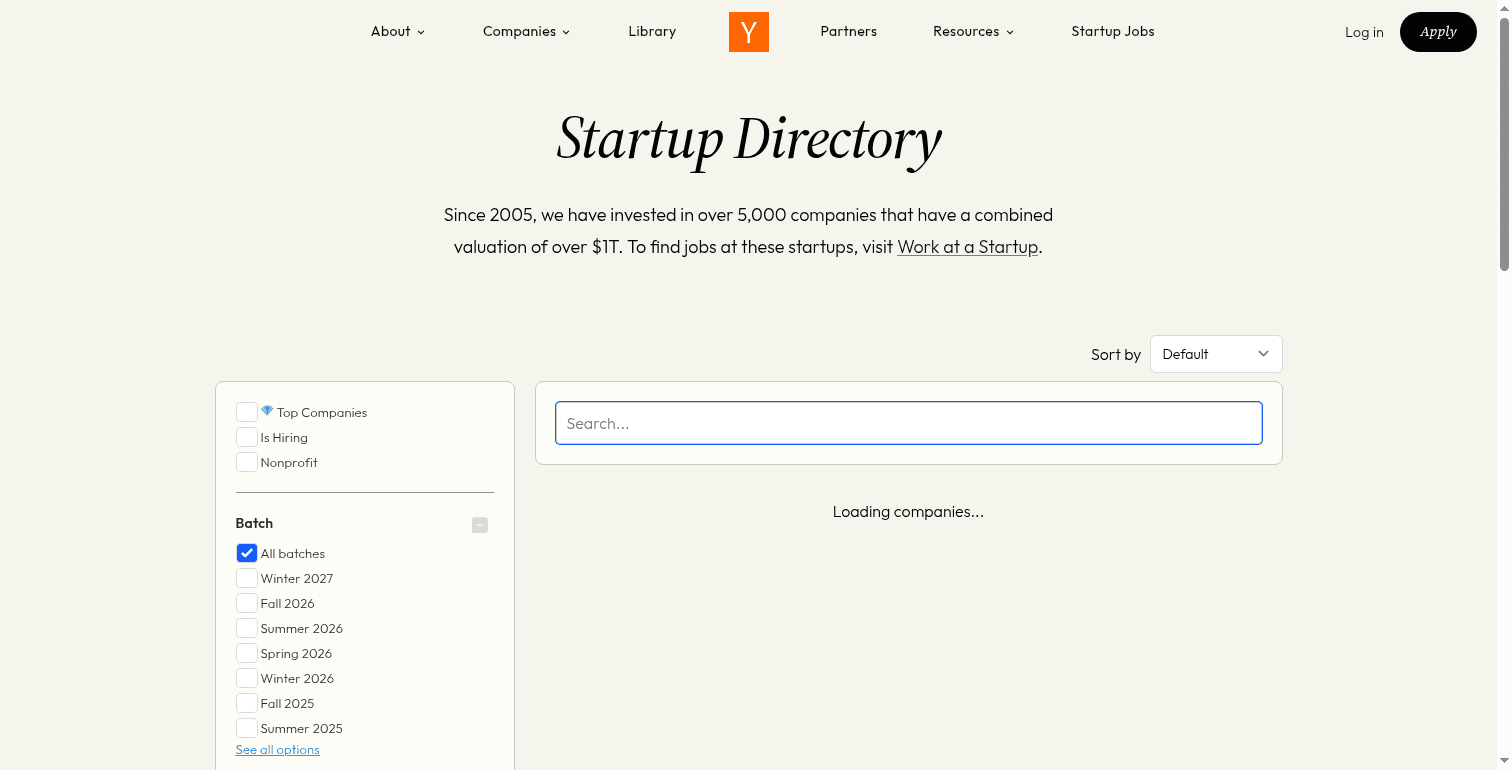
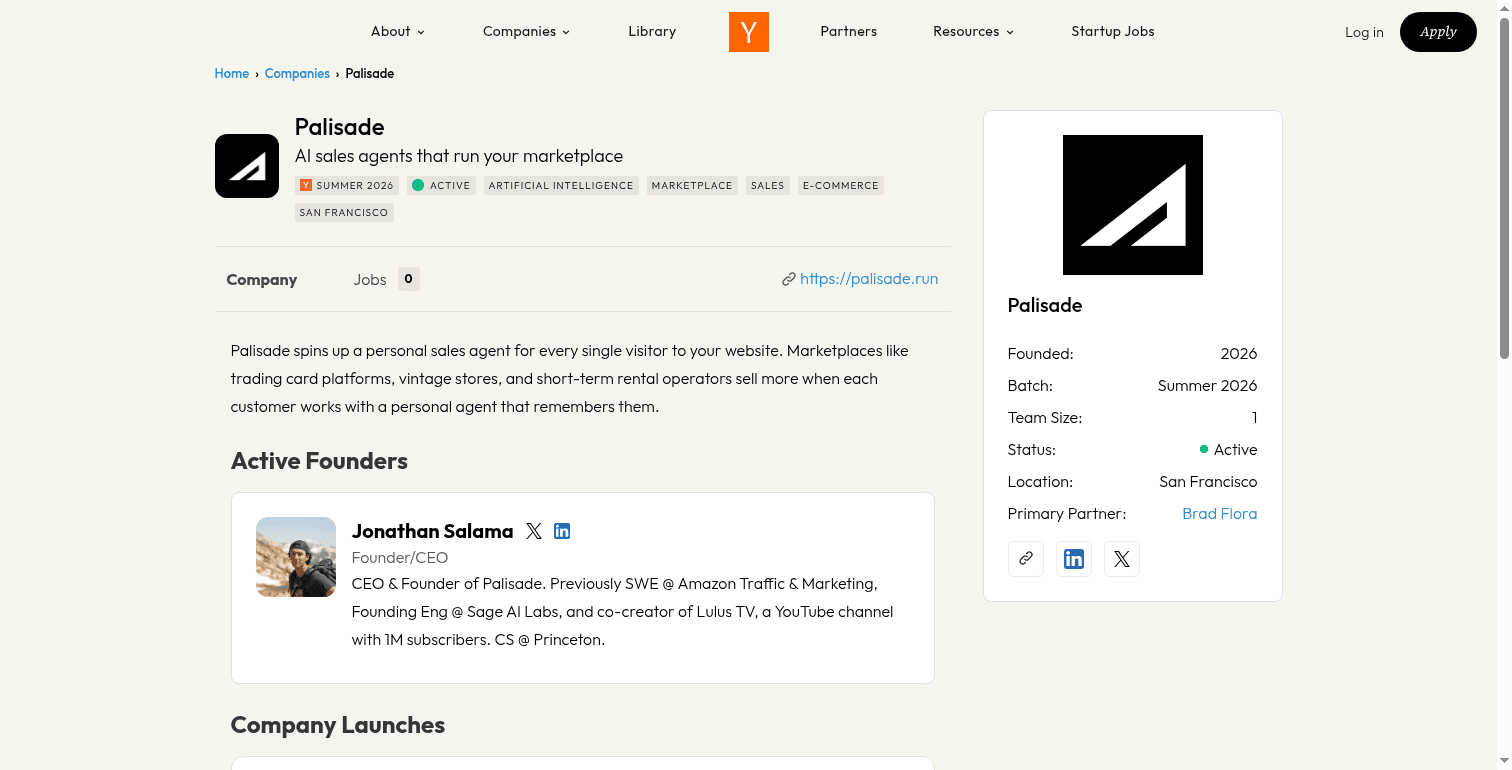
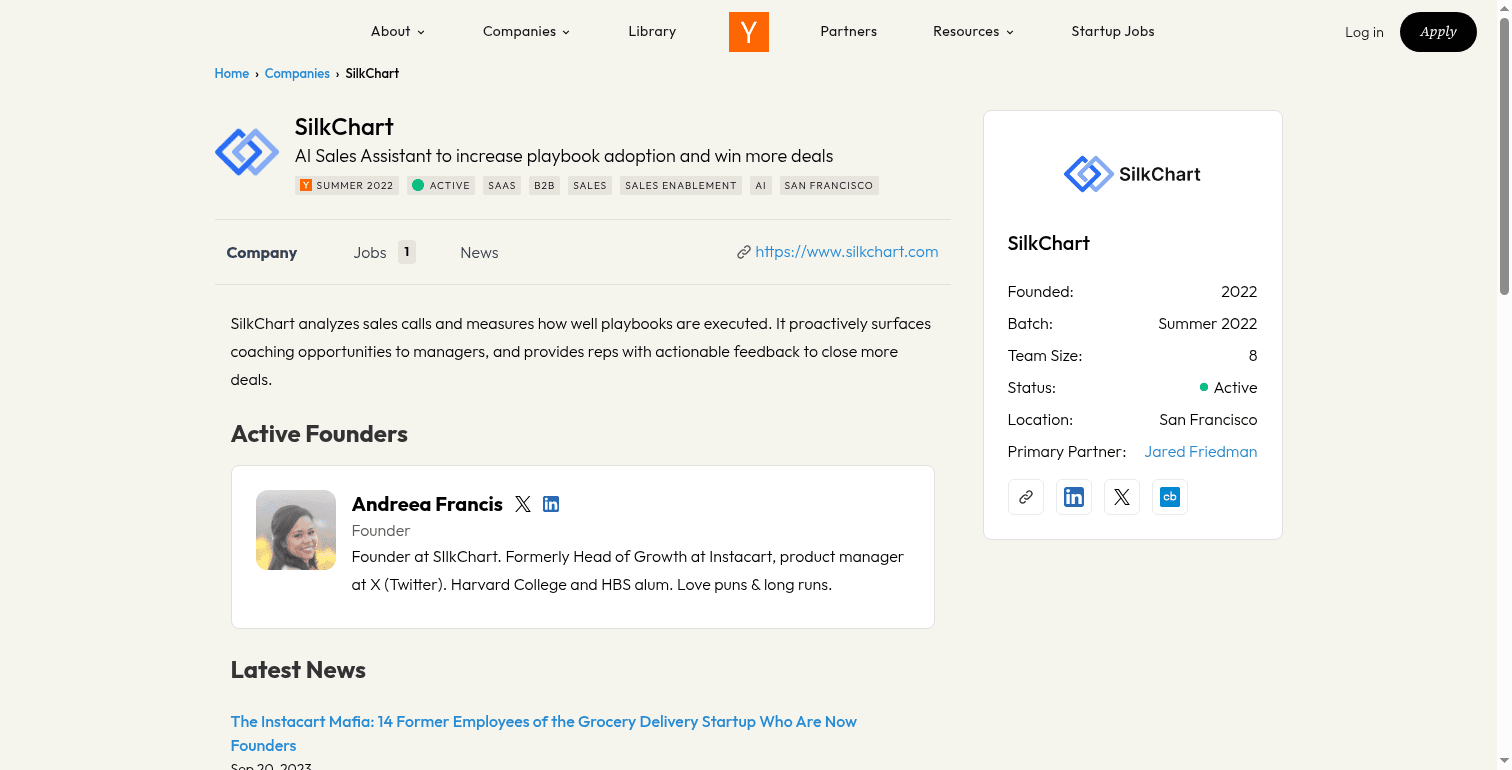
WHAT THIS EXACT CASE RETURNED · 53 SECONDS, 13 STEPS
{
  "case_id": "case_yc_ai_sales",
  "brief": "Top AI sales companies in recent
            YC batches, with sites",
  "verdict": "5 companies identified",
  "findings": [
    { "name": "Palisade",
      "note": "AI sales agents for marketplaces",
      "url": "palisade.run" },
    { "name": "Quotain",
      "note": "AI sales simulations on real deals",
      "url": "quotain.com" },
    { "name": "AiSDR",
      "note": "AI sales prospecting",
      "url": "aisdr.com" }
  ],
  "exhibits": ["ex/a.png", "ex/b.png", "ex/c.png"],
  "steps": 13,
  "duration_seconds": 53
}
Doc 7 of 8 · the paperwork
No SDK ceremony, no eight-step pipeline builder. A case is one POST. The report is JSON your warehouse already understands.
THE BRIEF · REQUEST
curl -X POST https://gumshoe.run/v1/case \
  -H "X-API-Key: gum_your_key" \
  -d '{
    "url": "https://sierra.ai",
    "brief": "Does this company sell
              autonomous AI agents?",
    "webhook": "https://you.com/hooks"
  }'
THE REPORT · WEBHOOK PAYLOAD
{
  "case_id": "case_0001",
  "url": "https://sierra.ai",
  "verdict": "yes",
  "confidence": 90,
  "summary": "AI agents platform: build,
              deploy, manage agents.",
  "evidence": [
    "Build powerful AI agents quickly,
     with or without engineering support",
    "Deploy a single agent across chat,
     SMS, WhatsApp, email, voice",
    "Ghostwriter builds a production-ready,
     multilingual, multichannel agent"
  ],
  "read_at": "2026-08-29T11:04:22Z"
}
Also in the file · bulk work
Batch: you already have the list.
POST up to 250 companies to cases/batch and they get worked a dozen at a time, one investigator per row, filling in the facts. Loop the call for the next 250.
Sweep: you don't have a list yet.
Give a brief and a target count. We fan out the searches, verify every candidate, dedupe server-side, and deliver unique companies. You never file the same request twice, and you never pay for a duplicate.
THE SWEEP · ONE CALL, 100 UNIQUE ROWS
curl -X POST https://gumshoe.run/v1/sweep \
  -H "X-API-Key: gum_your_key" \
  -d '{
    "brief": "Companies selling AI agents
              built on LangChain",
    "count": 100,
    "webhook": "https://you.com/hooks"
  }'

// We fan out, verify, dedupe.
// Up to 100 unique rows per call.
// Duplicates are never billed.
// Credits reserved up front,
// undelivered rows refunded.
Also in the file · agent-first
Gumshoe ships as an MCP server. Claude, Cursor, or your own agent mounts the agency and gets file_case, get_report, list_cases, file_sweep and draft_brief as native tools. Your agent decides what needs investigating. Ours does the legwork and returns the closed case.
Read the MCP field manualMOUNT THE AGENCY · MCP
{
  "mcpServers": {
    "gumshoe": {
      "url": "https://gumshoe.run/mcp",
      "headers": {
        "X-API-Key": "gum_your_key"
      }
    }
  }
}
Doc 8 of 8 · rate card
One credit = one URL investigated. LLM included, math included, surprises not included.
SPECIMEN · ONE MONTH ON THE METER
"Does acme.com sell AI agents?"
  1 URL read ................ 1 credit

"Qualify last night's 250 signups"
  cases/batch, 250 URLs ... 250 credits

"Full dossier on sierra.ai"
  deep research: 4 pages read,
  2 outside searches ....... 15 credits

"Read the YC directory,
  it needs clicking"
  fieldwork, real browser .. 42 credits

TOTAL DEBITED ............. 308 credits
7,500
CREDITS A MONTH · ONE CREDIT, ONE URL
$29/mo
Move up or down a rung any month. Change takes effect the same day, prorated.
Every rung, at a glance
| PLAN | CREDITS / MO | PRICE / MO | PER 1K | REQ / MIN | YOU SAVE |
|---|---|---|---|---|---|
| Walk-in | 1,000 | $0 | — | 60 | no card |
| 7.5K | 7,500 | $29 | $3.87 | 120 | entry rate |
| 20K | 20,000 | $74 | $3.70 | 300 | 4% |
| 50KPOPULAR | 50,000 | $175 | $3.50 | 600 | 9% |
| 100K | 100,000 | $329 | $3.29 | 960 | 15% |
| 250K | 250,000 | $779 | $3.12 | 960 | 19% |
| 500K | 500,000 | $1,449 | $2.90 | 960 | 25% |
| Bureau | negotiated | custom | under $2.90 | dedicated | talk to the chief |
Every paid rung includes browser fieldwork, deep research and list sweeps. Move up or down any month, prorated the day you switch. The free tier runs standard cases only. REQ / MIN is the enforced ceiling on cases, and every response tells you where you stand: batch calls carry up to 250 URLs each, so the 50K rung admits 12,500 URLs a minute.
Exhibit D · full disclosure
Two honest ways to do this today: rent a spreadsheet empire, or glue search and scrape APIs together yourself. Here is exactly what each one costs you, in dollars and in evenings.
| CLAY (CLAYGENT) | DIY: SEARCH + SCRAPE | GUMSHOE | |
|---|---|---|---|
| 1,000 URLS COST | $150 to $250 in credits | Cheap per call, plus the pipeline you build and babysit | $3.87 at the entry rung, $2.90 at volume, pipeline included |
| WHAT COMES BACK | Enriched cells in a spreadsheet | Raw links and HTML you still have to read and judge | Typed JSON: verdict, confidence, quotes from the page |
| PROOF ATTACHED | Source links | Whatever you remember to log | Exact quotes, plus screenshots on fieldwork runs |
| REAL BROWSER ON JS SITES | No | Only if you build and host it | Yes, opt-in, 42 credits, screenshots attached |
| LIST BUILDING DEDUP | Your problem | Your problem | Server-side, duplicates never billed |
| BUILT FOR | Ops teams who live in tables | Engineers who enjoy the glue code | Systems that act on verdicts |
Ran dry mid-month? · top-ups at the rate your rung already earned
Credits
+2,500
$9.67
at the 7.5K rate · less on every rung above
Credits
+10,000
$38.67
at the 7.5K rate · less on every rung above
Credits
+50,000
$193.33
at the 7.5K rate · less on every rung above
YOU PAY YOUR OWN RATE, THE ONE YOUR RUNG ALREADY EARNED YOU. NO SURCHARGE FOR RUNNING HOT. ONE CLICK FROM YOUR DASHBOARD, CREDITED IN SECONDS. YOUR MONTHLY CREDITS RESET EACH CYCLE, TOP-UP CREDITS NEVER DO: THEY SIT THERE UNTIL YOU SPEND THEM. RUNNING OUT EVERY MONTH? THE NEXT RUNG UP IS CHEAPER PER URL, THAT IS THE WHOLE REASON TO CLIMB.
THE THREE RATES · MEASURED
// 1 credit - read the page
POST /v1/case
{ "url": "https://acme.com",
  "brief": "Do they sell agents?" }
DEBIT ...................... 1 credit


// 42 credits - the page needs clicking
POST /v1/case
{ "url": "https://portal.acme.com",
  "brief": "List the plans behind
            the filter",
  "fieldwork": true }
// Real browser, screenshots kept
// as exhibits. Up to 15 steps.
DEBIT .................... 42 credits


// 15 credits - the full dossier
POST /v1/case
{ "url": "https://acme.com",
  "brief": "Everything: pricing,
            customers, funding,
            hiring, positioning",
  "depth": "deep" }
// Several pages + outside searches.
DEBIT .................... 15 credits
Appendix · interrogation transcript